About the project
The Nizhnekamsk Master Plan aims to rethink the life trajectory of this industrial city and make it more attractive for residents by developing a comprehensive strategy for urban spaces.
-
AddressNizhnekamsk, Republic of Tatarstan
-
ClientClient: PJSC Nizhnekamskneftekhim, Administration of Nizhnekamsk
-
Year (Design)2023 - 2024
-
Area116 000 000m2
-
Population (2024)240 000
-
Nizhnekamsk is a Neo-Industrial City
Defining the city's development direction

Founded in the 1960s, Nizhnekamsk is a young industrial city. Today, its challenges include youth outmigration, a lack of diverse urban services, and limited career opportunities outside petrochemicals. Residents also express concern over healthcare and ecology, despite air quality now being significantly better than, for example, in Moscow.
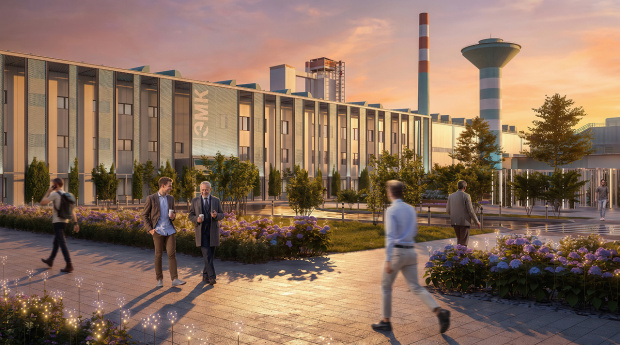
Modern production facilities are already cleaner, more efficient, and more advanced. The master plan’s goal is to modernize the city’s structure and raise its quality of life by adding the “NEO” prefix. The neo-industrial approach preserves the industrial sector while changing the focus toward human capital. It means creating a comfortable living environment, fostering personal growth, and expanding opportunities for business. -
Nizhnekamsk Development Strategy
Six Strategic Directions for Development

A comprehensive approach to urban development is presented in the form of six key areas:
1. Polycentric urban structure involves revitalizing existing and creating new city centers as drivers of growth and visual landmarks.
2. “Fast City” is a 15-minute car and public transport access to jobs and leisure.
3. “Slow City” is a 15-minute walking and cycling access to services and recreational spaces.
4. Kama River leisure zones are unlocking the city’s waterfront potential on a regional scale.
5. New housing standards are densifying existing urban fabric and creating high-quality, human-scaled neighborhoods.
6. Industry–city integration is fostering public understanding of local industries and using urban resources to support industrial development. -
Polycentric Development
Revitalization of existing and creation of new urban centers as drivers of city development and prominent visual landmarks.

Historically polycentric, Nizhnekamsk will retain this character with 7 new centers and 12 revitalized ones. This approach diversifies urban services, enhances visual identity, supports small and medium businesses, increases tourism appeal, and attracts outside investment.

-
Cultural Center & “Embassy of Nature”
The city’s main meeting place and visual landmark

The Cultural Center features a 1,000-seat transformable concert hall, creative workshops, and a glass greenhouse hosting rare plants and events.


-
Tourist Center “Stakheev Estate”

The “Stakheev Estate” is the only cultural heritage site in the Nizhnekamsk municipal district. The project involves not only building’s restoration but also assigning it new functions such as a museum of entrepreneurship history, a hall for off-site celebrations, and a 250-seat restaurant.

-
Fast City / Slow City
Strengthening bicycle and pedestrian connections through the improvement and development of street retail networks and urban amenities along key routes.

All centers will connect through both “fast” (car and transit) and “slow” (bike and pedestrian) networks. Many boulevards will become neighborhood parks, while a continuous green ring will encircle the city, linking new and existing parks, including the proposed Omshanka Park, the vibrant Neftekhimikov Park, the Korablelnaya Rosha forest, and a new riverside promenade.

-
Family Park
Central park for culture and leisure activities

Family Park is a 65-hectare cultural and leisure hub with a large lake, beach, island, and piers. It is flanked by sports and cultural facilities.
-
Kama Riverside Development

Although the city is located by a river, it has not had a developed embankment until now. However, the recreational potential of the waterfront areas is high, which is why creating a system of recreational paths, embankments, and cycling routes has become an important focus of the city’s development strategy.

-
Riverside
Introduction of promenades, cycling routes, and a Resort Embankment with leisure areas and a new hotel.


-
City and Industry Connection

The industry, which is the main driver of Nizhnekamsk’s development, should become the starting point for shaping a new public attitude toward the city and its industrial heritage. The goal of the city and its enterprises is to stop the outflow of young people and engage them in the development of Nizhnekamsk and its industries.

-
Neftekhimikov Park

Upgraded from a district park into a city-scale venue, with an interactive Chemistry Pavilion created jointly with local industry.


-
New Level of Housing in the City
Housing & Urban Environment

Currently, 65% of the housing stock consists of five-storey buildings built before 1985. The plan proposes targeted infill construction of “comfort” and “comfort-plus” housing to balance density (1.2 FAR) and support local business, while creating a modern, well-serviced urban environment.