About the project
Wowhaus was tasked with transforming the most remote and underused area into an attractive destination. Working together with sociologists, the architects conducted a study that led to the creation of a concept for a leisure format new to Moscow. It was along with a detailed functional and service model. Based on this model, they designed a space for both people and animals. It is a place for playing, learning, and family celebrations, where farm animals live in comfort and safety.
-
AddressMira Avenue, 119, Moscow
-
ClientVDNH
-
Year (Design)2015 - 2015
-
Year (Implementation)2015 - 2016
-
Area30 000m2
-
New Leisure Format

The Urban Farm is a place for family recreation where children can learn more about the world around them. They can learn about domestic animals, plants, and hands-on skills. And all of this is set in a picturesque spot by the pond.
-
What makes the Urban Farm?

The farm is divided into three large sections, consisting of both open and enclosed areas located on sites with varying terrain. The first section is dedicated to interaction with domestic animals. Here, under the guidance of zoologists, children can get to know the animals and take care of them, for example to prepare food, feed them, and clean up after them.
-
To Explore Life

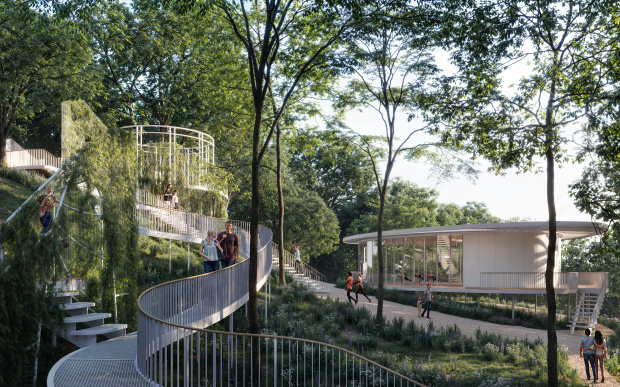
The second section features year-round workshops and the “Construction Site.” The third section introduces visitors to the world of botany, with a greenhouse, an orchard, and a vegetable garden. In addition, the farm includes extra facilities: a Young Naturalists’ House with a forest library, a children’s fishing area, a kiosk, a summer picnic area, a restaurant with a children’s cooking school, and a playground.
-
Village in the City

The architectural design of most pavilions is based on the image of a traditional village house with a gabled roof. This archetype was adapted into buildings of varying sizes and proportions, the main ones being the barn, the workshops, and the greenhouse. The key stylistic device is the combination of massive timber trusses with large expanses of glazed façades. The only difference from this archetypal form is in the craft workshops, where training takes place as these pavilions have a parabolic shape and are clad in wooden shingles, emphasizing the overarching theme of artisanal production.